


Arboretum
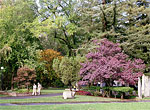
With over 200 species of plants, the arboretum encompasses all 132 acres of the university campus. John Bidwell planted many varieties of trees during his lifetime, and trees continue to be planted on university grounds today. A variety of tours and self-guided walks have been created since the arboretum's inception. One tour follows a path along Big Chico Creek, where native plant restoration has been taking place. The arboretum was dedicated on March 5, 1982 in honor of Dr. Gordon James Van Laan.
Big Chico Creek
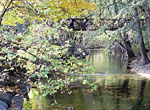
Chico State has one of the few campuses that has a creek running year-round through its grounds. Students, staff, faculty, and visitors enjoy the babbling brook every time they cross one of the seven foot bridges that span Big Chico Creek as it flows from the Sierra Nevada foothills, through Bidwell Park, downtown Chico, and the campus, on its way to the Sacramento River.
Bidwell Bowl
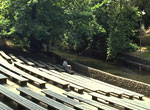
Built as a Works Progress Administration project in 1938, the amphitheater known as the Bidwell Bowl was one of many ventures in Chico that created work for people during the Depression. Located on the bank of the creek, next to the Physical Science building, the Bidwell Bowl had been used for various gatherings. Concerts, speeches and other activities were held in the amphitheater's early history, but by the 1960s the area had been largely abandoned. Many believe that the construction of new campus buildings in the area deterred people from using the amphitheater. Today Bidwell Bowl is one of the quieter spots on campus.
Mary Lemcke Camellia Garden
Located on the north side of Big Chico Creek, near Holt Hall, the Mary Lemcke Camellia Garden was dedicated on Founders Day, April 9, 1969. Mary Lemcke Camellia was a charter member of the Chico State Advisory Board and the University Foundation. She gave over 20 years of service to the University, and the garden commemorates all that she did for Chico State. The garden was created with plants that came from her home, as well as plants from homes that were demolished to make way for university expansion.
Eagle Lake
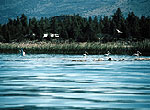
The CSU, Chico Research Foundation and the University own the field station which is situated on 80 acres on the middle eastern shore of Eagle Lake. The Eagle Lake field station (ELFS) lies at the juncture of four major geologic provinces and this geologic diversity provides a unique set of ecological communities. Throughout the years, the ELFS has received most of its use from ecology and anthropology faculty and students from CSU, Chico and UC Davis. Field courses, research, workshops, professional meetings, and conferences are all part of the academic activities that take place at the ELFS.
Ecological Reserves
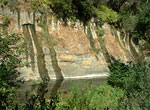
The Big Chico Creek Ecological Reserve (BCCER) contains 3,950 acres of diverse canyon and ridge habitats, including 4.5 miles of Big Chico Creek, and is home to many plant and animal species. It is owned and managed by the CSU, Chico Research Foundation. BCCER contributes to the understanding and wise management of the Earth and its natural systems by preserving critical habitat and providing a natural area for environmental research and education.
Butte Creek Ecological Preserve is a 93-acre site along Butte Creek. The property contains more than a mile of creek frontage, which is critical salmon habitat and spawning grounds, as well as habitat for many species of special status, including Chinook salmon and bald eagle. The preserve works in conjunction with other programs to achieve a reasonable balance among the diverse demands on the resource base of the Butte Creek watershed. The reserve is open to the public year round.
University Farm
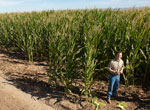
In 1953, Loren D. Phillips led the development of the agricultural program at Chico State College. A few years later, a four-year degree program was offered for the first time at the college. Part of the creation of the agricultural program focused on acquiring land for the farm. The first farm was located on 14 acres of land off of Sacramento Avenue. This farmland was rented in 1954 from Native Americans who owned the property. A year later the university farm moved to 440 acres of Diamond Match property. While this land was a valuable asset to the new agriculture program, it was not adequate as a teaching facility.
California State Senator Paul L. Byrne, who graduated from Chico State in 1932 and served in World War II as a marines, led an effort to acquire more farmland for Chico State College in 1957. With his help, the college was granted $500,000 for the purchase of land in the Chico area. Chico State first tried to purchase 588 acres of the Patrick Compton Ranch, but the funds for the purchase were not accessible at the time. Sen. Byrne continued to push for farmland and helped gather more funding for a larger section of property. In 1960, Chico State acquired 644 acres of the Navarra-Hengst Ranch on Hegan Lane. Throughout the 1960s, the farm was developed in three phases with additions of barns, silos, greenhouses, and many other facilities. In 1963, the farm was dedicated as the Paul L. Byrne Memorial Farm, in honor of the senator who made the university farm a reality. Today the farm totals approximately 800 acres.
Paul L. Byrne graduated from Chico State in 1932. He had served in the marines in World War II, and later served as a politician in the state legislature. After his death in 1962, the farm was dedicated in his honor.
Old Hutch's Plaza
The courtyard between Trinity Hall and Kendall Hall was dedicated on June 11, 1979 in honor of history professor William H. Hutchinson. An expert on California and Western United States history, many knew Hutchinson as "Old Hutch." From 1953 to 1978, Hutchinson taught at Chico State. During his career he wrote and edited many books and articles. Hutchinson enjoyed the campus atmosphere, and could be found many times sitting on a bench in the courtyard that now bears his name.
Gus Manolis Bridge
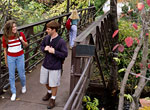
Located between Selvester's Café and Holt Hall, the bridge was dedicated on October 21, 1961 in memory of Gus Manolis. A great Chico State football coach, Manolis was named "coach of the century" because of his winning record. In 1957, Manolis lost his life, at age 34, while searching for a boy scout lost in the mountains near Mendocino. The bridge was built from funds raised to create a memorial in his honor.
George Petersen Rose Garden
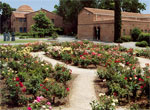
During the spring of 1957, a rose garden was planted behind Trinity Hall. It was planted in the spot where the old cafeteria once stood. The rose garden took four months to develop. Supervising groundskeeper Richard Pessner designed the garden and planted 400 rose bushes. Donated by horticulturalist George F. Petersen, the roses were of many varieties and colors. Petersen wanted to garden beyond his backyard, so he proposed a rose garden for the campus. From 1909 to 1948 Petersen owned Lindo Nursery, and while in retirement his own garden grew to include over 165 types of roses. His love for gardening may have been inherited from his father, who was John Bidwell's groundskeeper. Petersen's rose garden became an instant success. Today, there is a fine for picking roses from the garden.
Roth Planetarium
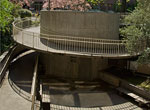
The Roth Planetarium came into existence in 1975 because of a generous gift from James and Betty Jane Roth. Another generous gift of $340,000 from Betty Jane Roth in 1996 assured the continued operation of the Planetarium up to and beyond the next arrival of Halley's Comet in 2061. The Roth Planetarium has a Spitz 373 projector which projects 1,000 stellar images onto the 14 ft. 8 in. (5 meter) dome.
Theatres
Harlen Adams Theatre
This theatre complex in the Performing Arts Center is named for Harlen Adams, a distinguished teacher, scholar, university administrator, community leader, and friend of the performing arts.
Ruth Rowland-Taylor Recital Hall
This recital hall is named in honor of Ruth Rowland-Taylor, professor of music and head of the music department from 1929 to 1955.
Larry Wismer Theatre
This theatre in the Performing Arts Center is dedicated to Lawrence H. Wismer, outstanding teacher-director, founder of The Court Theatre, and professor of drama from 1963 to 1980.
Trinity Commons / Free Speech Area
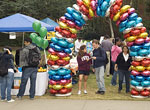
Since 1969 and throughout its existence, the Free Speech Area, now called Trinity Commons, has reflected the times. During the Vietnam War years, it was an arena for debate. In the early 1970s, the area became a venue for entertainment, with bands playing several times a week. The 1988–89 school year saw renewed student activism as one group staged several cardboard box sleep-in rallies to bring attention to the plight of the homeless. After the attacks of Sept. 11, 2001, almost 2,000 people gathered in the Free Speech Area for a memorial. More recently, Occupy Chico State rallies have started here.